01
Before & after
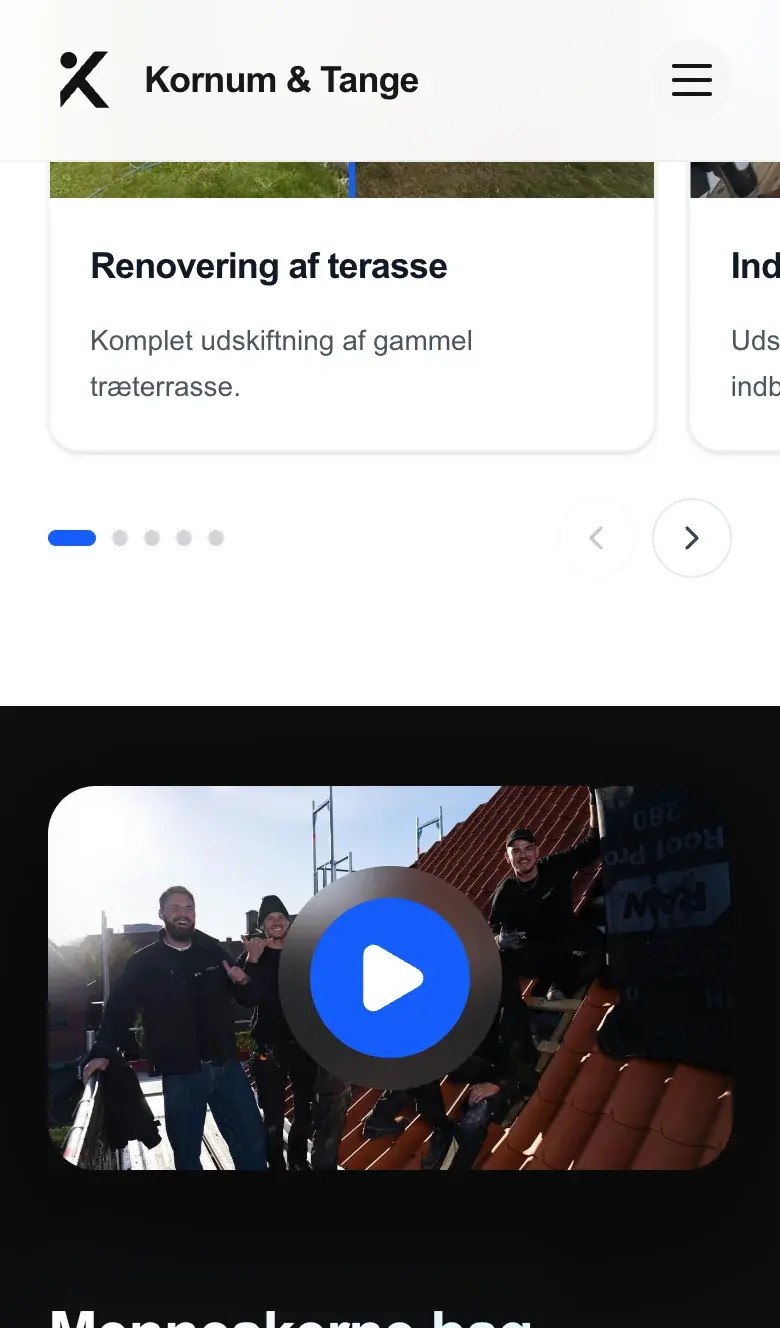
Drag across real projects — a terrace, a kitchen, a new roof — to see the change.
Scroll to begin
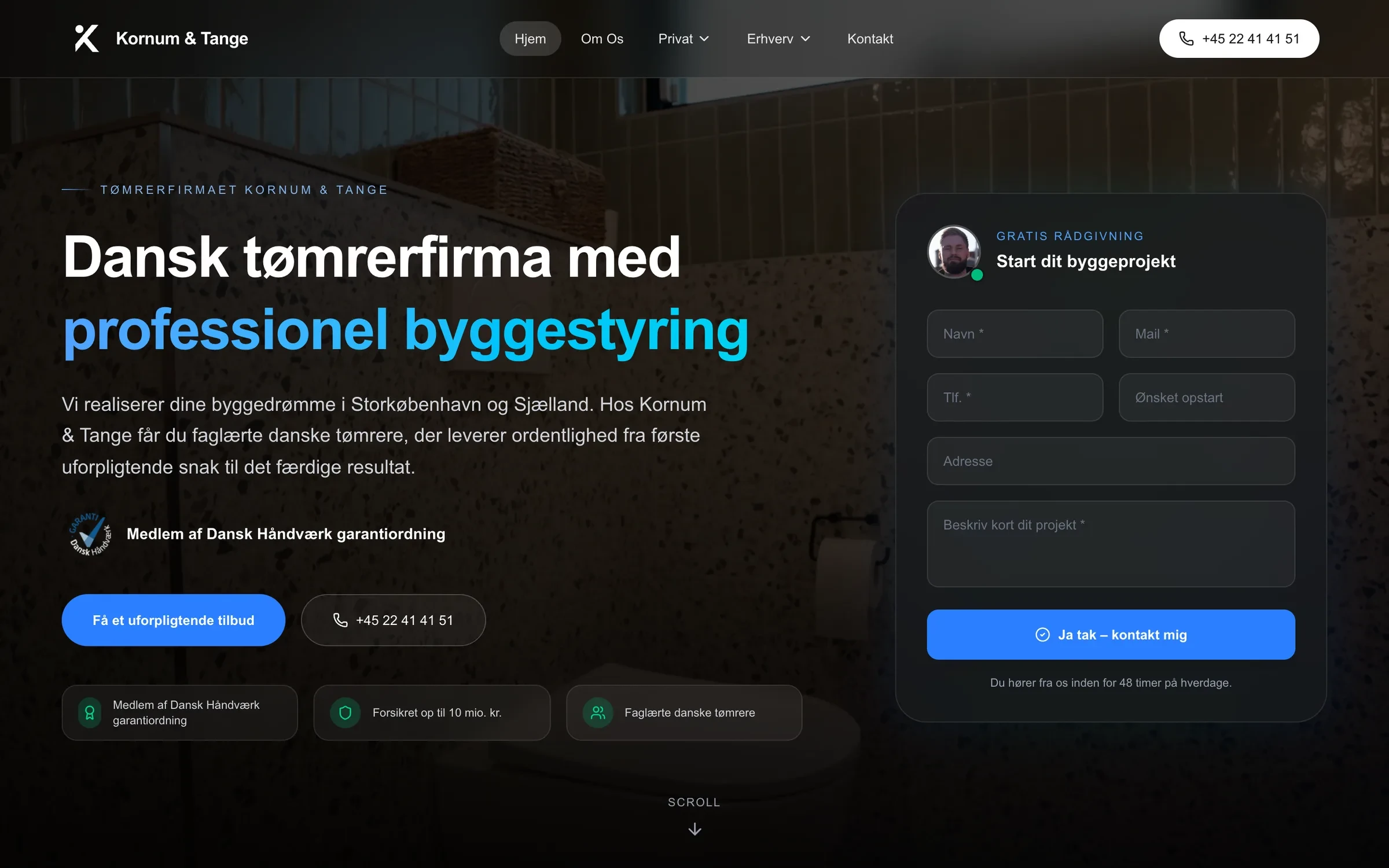
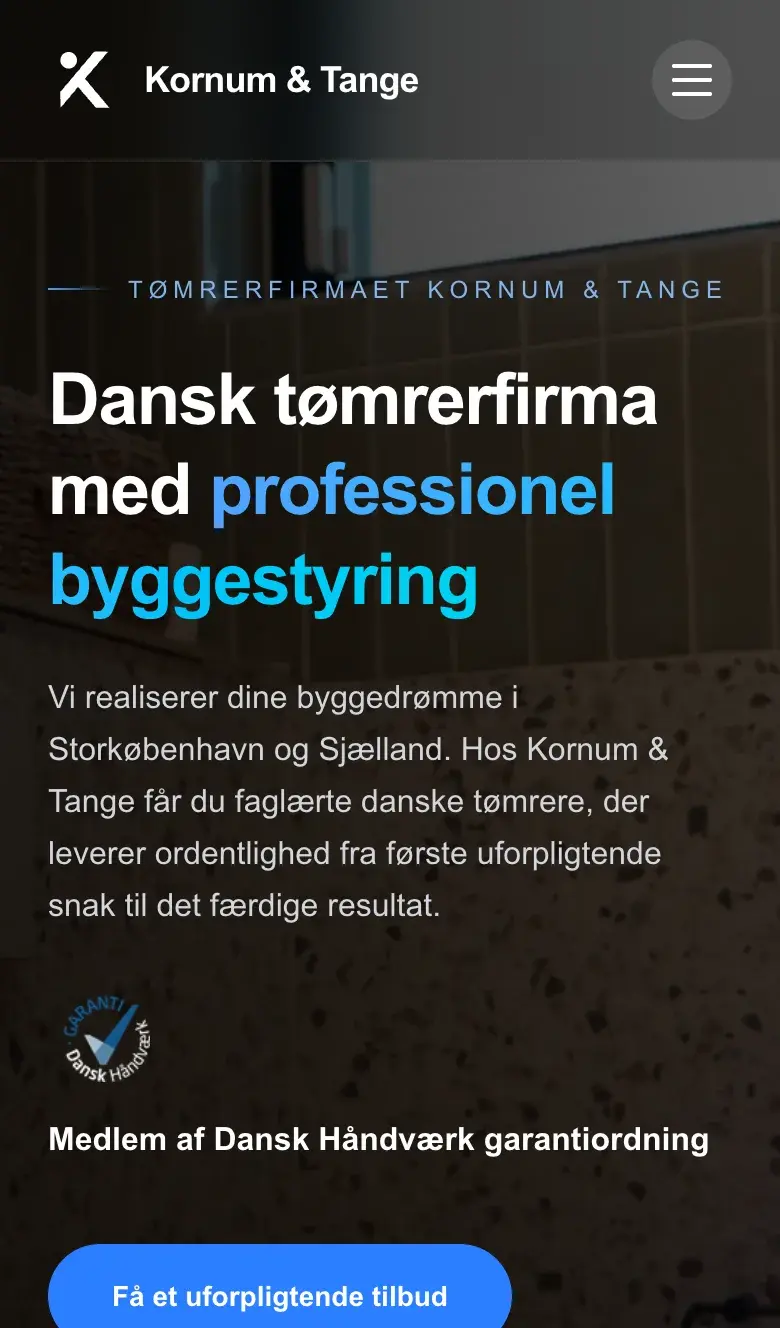
A Copenhagen carpentry and roofing company serves homeowners and businesses. Each service needed its own landing page and request form, and the owners needed to run the site themselves.
My part
Sole developer of the site and the CMS: the UI and motion, the content model and Studio, the lead route and a deploy plugin.
12
Service pages from one route
5
Request forms, one payload
7
Content types, 6 of them fixed pages
149
Site commits, all mine
Five forms, one shape of data. The visitor only sees an error if both channels fail.
People
Customer
Planning a project
Owner
Publishing
Surfaces
The site
Fully static
Next.js
Studio
With a Deploy button
Sanity
Services
Lead route
One contract
/api/contact
Deploys
Rebuild on publish
Vercel
Data
Inbox
Resend
Sheet
Spreadsheet
Make → Sheets
01/04The page's URL decides the form: business, roof or private.
Publishing had to show up on a fast, static site, reliably, for owners who aren't developers.
The plugin the owners publish with. Try it.
Deploy website
Publishes every change to the live site.
01 · The problem
Private and business customers need different forms.
02 · The call
A service's address must start with its type, enforced in the CMS; that one value drives routing, the sitemap and which form appears.
03 · Why it matters
No setting to forget: the address decides.
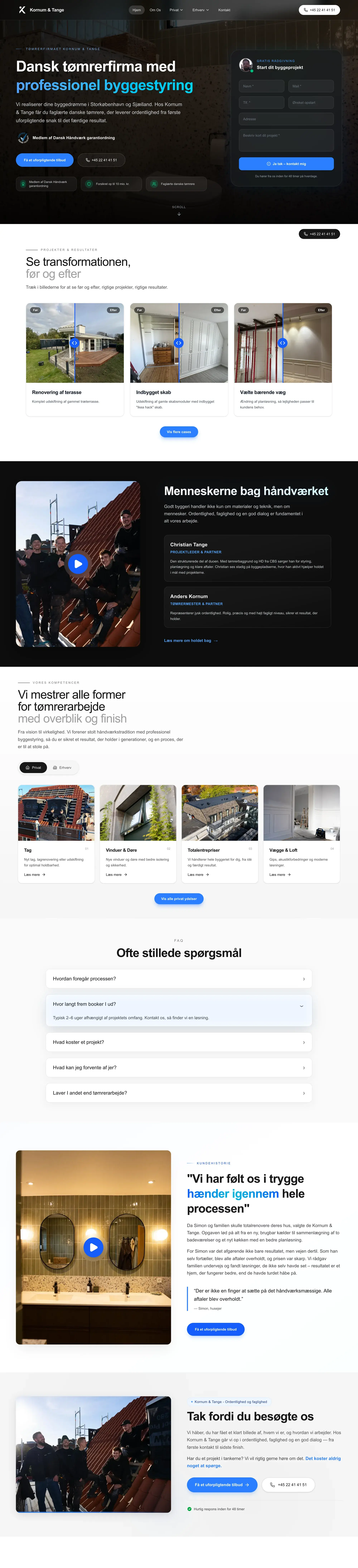
The pieces that make the Kornum & Tange site work — from the first screen to the last.
Drag across real projects — a terrace, a kitchen, a new roof — to see the change.
Start a building project from a form right in the hero.
Two clear paths through the services, one toggle apart.
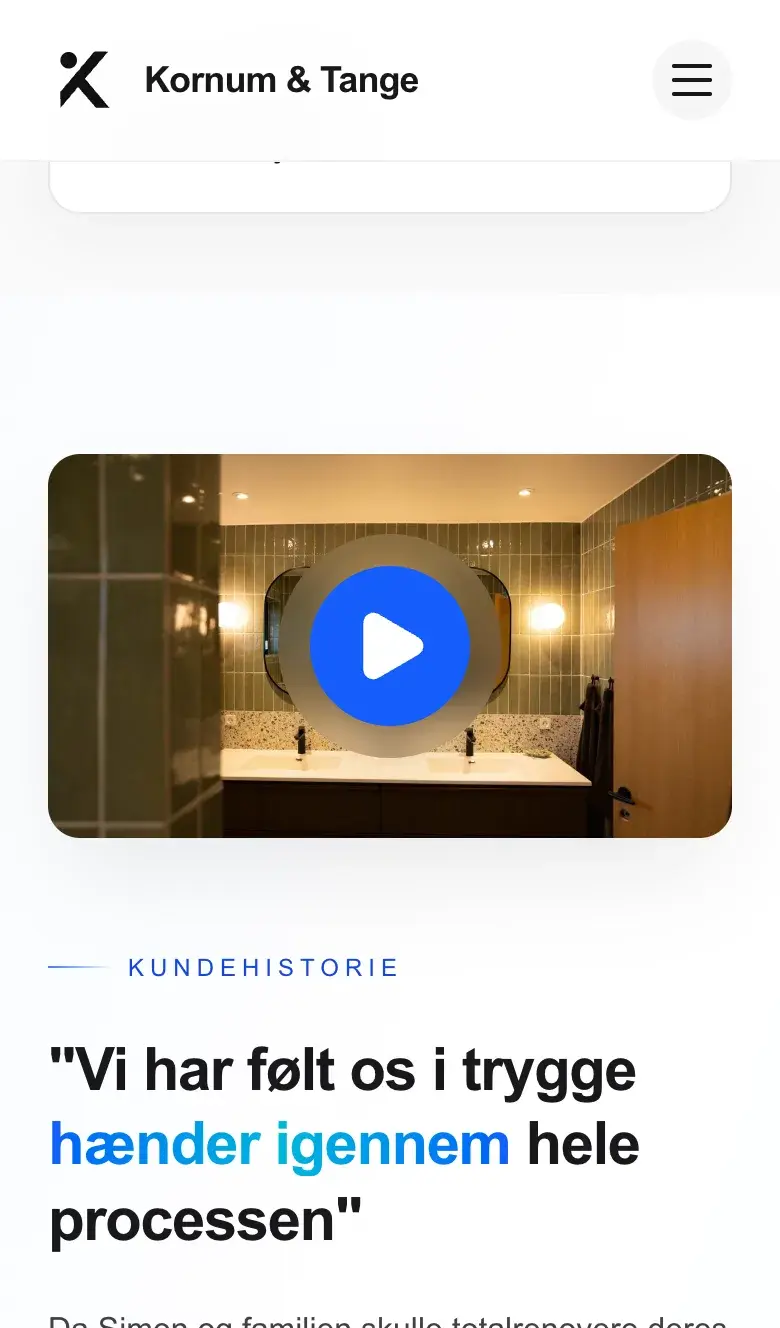
The team on video and a customer story told in their own words.
Process, booking and price, answered before anyone picks up the phone.
The full experience — every section, form and gallery — made for one hand and a small screen.